Kumi Shibata, Kazuhito Tsutsumi, Hiraku Murakami, Naoki Hosen ≪Hematology and Oncology≫ A small population of CD8 T cells expand robustly when stimulated with BCMAxCD3 bispecific T-cell engagers in vitro
Leukemia
Researchers from The University of Osaka find that only a small fraction of T cells may drive the robust anti-cancer response seen in breakthrough multiple myeloma immunotherapy
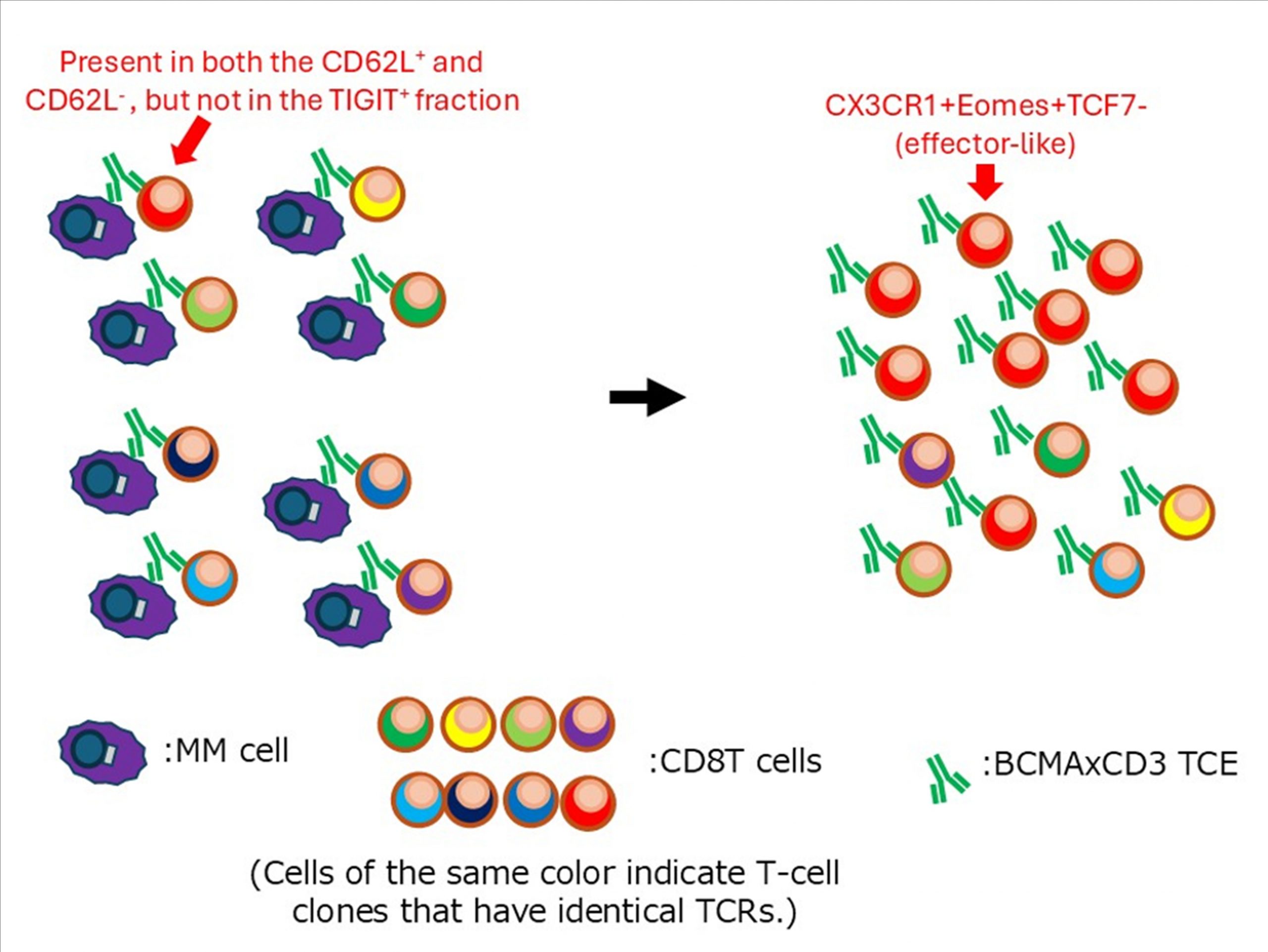
Fig1: Clonal expansion of a limited subset of CD8 T cells in response to BCMAxCD3 T-cell engager stimulation
Credit: Naoki Hosen
Osaka, Japan – Immunotherapy for cancer works like a guided missile, directing the body’s immune cells toward tumor cells. However, not all immune cells respond to the call to attack, and this can lead to variability in treatment responses. As immune cell response is a critical factor in the likelihood of overcoming the disease, understanding why is paramount.
To find out more, researchers from The University of Osaka have discovered that only a small proportion of immune cells called CD8 T cells undergo sustained clonal expansion in a model of multiple myeloma immunotherapy. These findings have recently been published in Leukemia.
To investigate immune cell response, the team investigated a class of drugs called “bispecific T-cell engagers” or “TCEs.” These drugs act like a bridge, linking T cells to cancer cells, so they can recognize and destroy tumors more effectively. TCEs have shown encouraging results in multiple myeloma, but some patients respond better than others. This may be due to differences in their T cells.
“We wanted to identify which T cells are capable of strong growth and repeated attacks on myeloma cells during treatment,” says one of the co-first authors, Kumi Shibata. “Understanding this process may help explain why some patients respond exceptionally well, while others do not.”
The team isolated different types of CD8 T cells from the blood of healthy donors and repeatedly exposed them to myeloma cells alongside the TCE drug elranatamab. They then tracked individual immune cells over time using single-cell RNA sequencing. Although many T cells became activated after exposure to the therapy, only a small number expanded dramatically. By day 10, just 2.3% of the T-cell clones accounted for most of the growth.
The small amounts of highly active cells found were shown to exhibit molecular features linked to powerful anti-cancer activity. Importantly, the cells that later dominated the response had already started multiplying within the first few days of treatment, suggesting that early immune activity could help predict which cells will become the most effective cancer fighters.
However, the study also highlighted a potential roadblock: a protein called TIGIT, which has been linked to T cell exhaustion. T cells carrying this protein showed very limited growth, suggesting that the exhausted immune cells may be less effective in the experimental system and in real-world therapy.
“Our findings suggest that a small subset of T cells may play a major role in generating the strongest anti-tumor response during TCE therapy,” explains senior author Naoki Hosen. “If we can identify or enhance these highly responsive cells before treatment, we may be able to improve outcomes for patients.”
Although the work was performed in laboratory models, the team believes the findings could be beneficial for future research. It is hoped the model can pave the way towards developing more effective immunotherapies for multiple myeloma and other cancers.
##
The article, “A small proportion of CD8 T cells expand robustly when stimulated with BCMAxCD3 bispecific T-cell engagers in vitro,” was published in Leukemia. DOI: https://doi.org/10.1038/s41375-026-02969-4
Summary:Researchers from The University of Osaka found that only a small subset of tumor-killing T cells undergoes extensive expansion during immunotherapy for multiple myeloma. By tracking individual cells, the team showed that the T-cell clones that later became dominant had already begun expanding shortly after the treatment started. The findings also suggest that highly proliferative immune cells show lower levels of exhaustion-related markers, offering new insights into why some patients respond better to immunotherapy.
Tweet 1: Only the good fight young: research from @UOsaka suggests that only a tiny proportion of immune cells drive a powerful response to multiple myeloma immunotherapy
@UOsaka_en
Primary Keyword:Health and medicine
Additional Keywords: Cancer treatments, blood cancer, multiple myeloma, cancer immunotherapy, RNA sequencing, single cell sequencing, effector T cells, naive T cells, memory T cells
Method of Research:Experimental study
Subject of Research: Human tissue samples
Title:A small population of CD8 T cells expand robustly when stimulated with BCMAxCD3 bispecific T-cell engagers in vitro
Journal:Leukemia
Authors:Kumi Shibata, Kazuhito Tsutsumi, Hiraku Murakami, Emiko Mizuta, Shunya Ikeda, Yosuke Kogue, Mizuki Kano, Kazuhiro Sanda, Yuto Maehara, Hiroki Akamine, Ryuhei Kawamoto, Mayuko Noguchi, Makiko Suga, Shuhei Kida, Yuta Yamaguchi, Yo Mizutani, Hisashi Kato, Yasutaka Ueda, Jiro Fujita, Shinsuke Kusakabe, Hidenori Kasahara, Akihisa Hino, Daisuke Motooka, Daisuke Okuzaki, Tomoaki Ueda, Kentaro Fukushima, Michiko Ichii, Naoki Hosen
DOI:10.1038/s41375-026-02969-4
Funded by:Japan Society for the Promotion of Science
Article publication date:27-APR-2026
Related links:
Department of Hematology and Oncology, The University of Osaka Graduate School of Medicine
https://www.med.osaka-u.ac.jp/pub/bldon/