
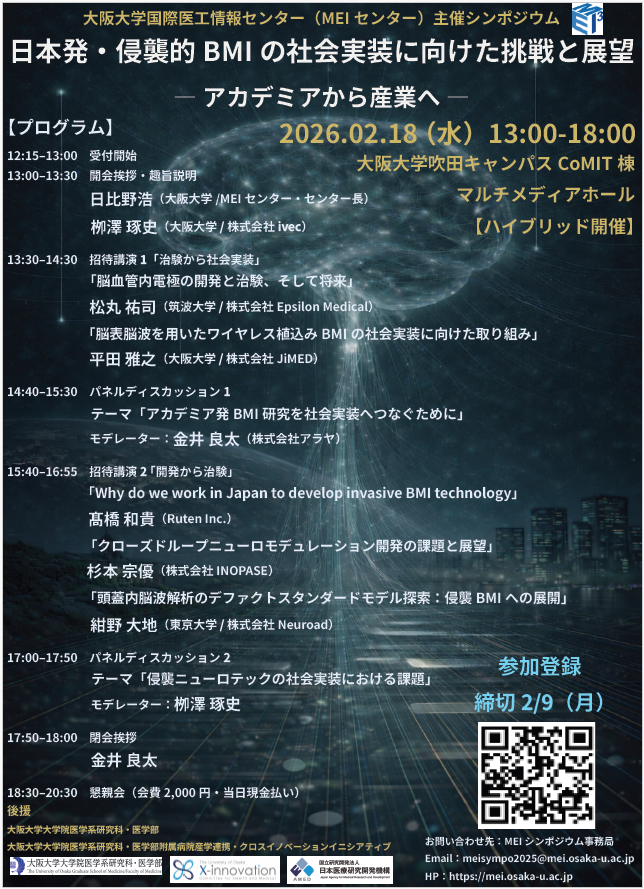
On February 18, the symposium “Challenges and Future Prospects for the Social Implementation of Invasive BMI Originating in Japan — From Academia to Industry —” was held, organized by Global Center for Medical Engineering and Informatics, The University of Osaka (MEI Center).
1. Event Overview
Date & Time: February 18 (Wed), 2026, 13:00-18:00
Venue: Multimedia Hall, CoMIT Building, Suita Campus, The University of Osaka
Format: Hybrid
Organizer: MEI Center, The University of Osaka
Support: The University of Osaka Graduate School of Medicine/Faculty of Medicine
Strategic Global Partnership & X(Cross)-Innovation Initiative, The University of Osaka Graduate School of Medicine & The University of Osaka Hospital
Participants: 48 onsite / 47 online / 40 reception
2. Program Summary
13:00-13:30 Opening Remarks, Statement of purpose
Hiroshi Hibino (The University of Osaka / MEI Center)
Dr. Hibino noted rapid progress in invasive BMI development and clinical translation. Reflecting on Japan’s limited industrial involvement in cochlear implant innovation—despite its clinical success—he stressed the need to globally disseminate Japan-originated invasive BMI technologies.
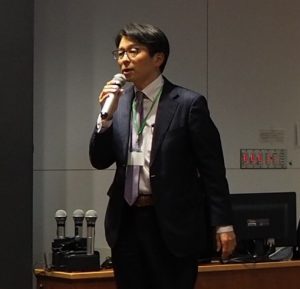
Figure 1 Opening remarks by Dr. Hibino
Takufumi Yanagisawa (The University of Osaka / ivec Co., Ltd.)
The symposium aimed to discuss ecosystem building for global deployment of Japan-origin invasive BMI. BMI was categorized as input, output, and bidirectional. Invasive BMI shows improved signal accuracy and practical benefit for ALS patients’ QOL. Challenges include reimbursement, regulatory approval, market size, and ethics—indicating Japan is still “creating the market.”
He introduced endovascular BMI R&D: minimally invasive placement under local anesthesia, access to deep/wide brain regions, high-amplitude signal acquisition, and stimulation potential. Scalability discussion emphasized coexistence of multiple modalities depending on patient needs.
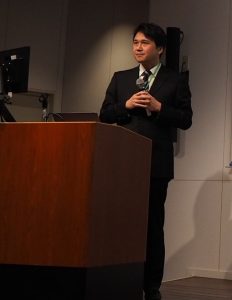
Figure 2 Statement of purpose by Dr. Yanagisawa
13:30-14:30 Invited Lecture 1: From Clinical Trials to Social Implementation
“Development and Clinical Trials of Endovascular Electrodes and Future Perspectives”
Yuji Matsumaru (The University of Tsukuba / Epsilon Medical Inc.)
Reported development of an endovascular electrode for epilepsy diagnosis. Based on guidewire technology, a thin electrode is placed in the venous sinus to record EEG. Unlike 1990s short-term attempts, this venture established domestic funding and manufacturing, launched investigator-initiated trials in 2024, demonstrated detection of focal activity difficult with scalp EEG, and confirmed safety. Future plans include multi-electrode expansion and ICU brain monitoring, aiming for global deployment.
Discussion covered manufacturing feasibility, multi-polar challenges, and need for post-placement rest.
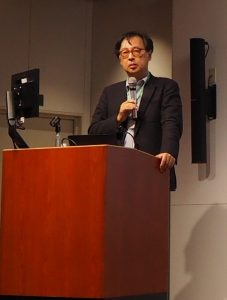
Figure 3 Lecture by Dr. Matsumaru
“Efforts Toward the Social Implementation of Wireless Implantable BMI Using Electrocorticography”
Masayuki Hirata (The University of Osaka / JiMED Inc.)
Outlined progress toward social implementation of a wireless implanted ECoG-based BMI. High-frequency motor cortex signals during movement intention can be decoded via AI to control robots, communication devices, and smart systems. Uncertainty in decoding can be compensated by robotic autonomy and large language models.
Key technologies: low-heat/low-power wireless power supply, communication, and high-performance amplifiers. Initial target: locked-in ALS patients; starting with replacing existing communication devices with “EEG switches.” Institutional efforts include PMDA consultation, guideline revision, registry systems, and facility standards. Long-term goals include speech decoding and neurostimulation for functional recovery (e.g., stroke).
Discussion addressed channel scalability and wireless speed–power trade-offs.
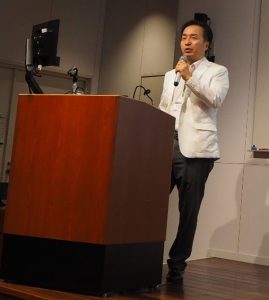
Figure 4 Lecture by Dr. Hirata
14:40-15:30 Panel Discussion 1
Theme: “Translating Academia-Originated BMI into Society”
Moderator: Ryota Kanai (Araya Inc.)
Debate centered on Japan vs. U.S. clinical development. Japan offers lower trial costs and regulatory dialogue; the U.S. has higher costs and complex reimbursement systems. A Japan-first strategy before global expansion was viewed as realistic.
For Breakthrough Device Program (BDP), Japanese nonclinical data were adapted with additional responses rather than designing purely for U.S. standards.
Insurance strategy must run parallel to regulatory strategy. Demonstrating QOL and patient value is essential but difficult for communication devices.
Successful implementation requires experienced personnel in regulatory, design, safety, IP, funding, and talent acquisition—often overlapping roles in startups.

Figure 5 Panel Discussion 1
15:40-16:55 Invited Lecture 2: From Development to Clinical Trials
“Why Do We Work in Japan to Develop Invasive BMI Technology?”
Kazutaka Takahashi (Ruten Inc.)
Described development of a closed-loop BMI for dysphagia. After recognizing high unmet need in swallowing function (vs. limb motor recovery), focus shifted accordingly. Dysphagia relates directly to aspiration pneumonia and mortality.
Using primate models, cortical decoding of swallowing-related signals is under study, aiming for FDA submission. Japan’s strength in precision manufacturing and primate research supports global collaboration.
Discussion covered Japanese electrode/material strengths, FDA strategy, and classification accuracy for voluntary vs. involuntary swallowing.
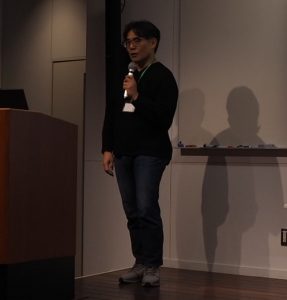
Figure 6 Lecture by Dr. Takahashi
“Challenges and Prospects in the Development of Closed-Loop Neuromodulation”
Munemasa Sugimoto (INOPASE Inc.)
Presented closed-loop neuromodulation for overactive bladder (OAB). Current continuous stimulation may lose effect over time. The company senses afferent bladder signals, extracts urgency-related patterns, and optimizes stimulation timing. Animal models confirmed correlation with bladder pressure; human validation is ongoing. Stepwise clinical data collection aims at FDA approval and commercialization.
Discussion addressed FDA vs. PMDA requirements and sensing strategies.
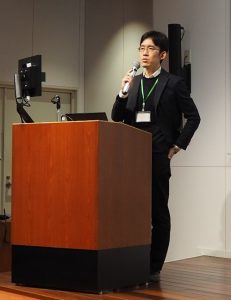
Figure 7 Lecture by Mr. Sugimoto
“Exploring a De Facto Standard Model for Intracranial EEG Analysis: Toward Application in Invasive BMI”
Daichi Konno (The University of Tokyo / Neuroad Inc.)
Explored the lack of a “de facto standard” model in electrophysiological data analysis. Unlike AI (CNN, Transformer), neuroscience lacks a shared foundation due to noise, nonstationarity, individual variability, and limited datasets.
Compared conventional GLM/SVM methods with Transformer models, S4 state-space models, and self-supervised foundation models. Current performance differences are minimal, likely due to limited data and task difficulty. Future work aims to establish scalable foundation models for invasive BMI and neuroscience broadly.
Discussion examined pretraining data scope (invasive vs. non-invasive/animal) and electrode placement constraints.
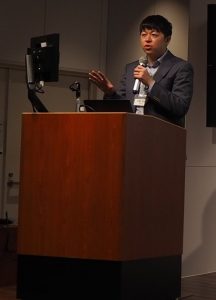
Figure 8 Lecture by Dr. Konno
17:00-17:50 Panel Discussion 2
Theme: “Challenges in Social Implementation of Invasive Neurotech”
Moderator: Takufumi Yanagisawa
Few participants felt Japan is ideally positioned; major challenges include talent and funding. There is a shortage of professionals spanning clinical, development, and commercialization domains. Investment scale and speed lag behind the U.S.
Risks include lack of major domestic implant-device leaders and potential U.S.-driven standardization. Early-stage coordination on standards and interoperability in Japan was proposed. China’s active international standardization efforts were noted.
Japan’s strengths:
Ecosystem priorities include accumulating success cases, reinvestment by experienced founders, and fostering collaborative environments.
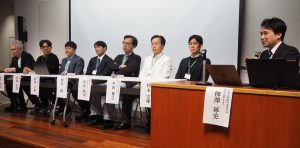
Figure 9 Panel Discussion 2
3. Conclusion
The symposium provided multidimensional discussion—from R&D and trials to reimbursement, standardization, and ecosystem formation—centered on invasive BMI. While structural challenges (talent, funding, standards, long-term responsibility) remain, Japan possesses strengths in materials science, clinical expertise, and early-stage support. Sustainable “All-Japan” collaboration and creation of successful cases will be key to global social implementation.