Ryo Kawasaki≪Public Health≫ Fertility Treatments and the Risk of Kawasaki Disease Among Offspring
JAMA Network Open
Nationwide study of more than 100,000 children finds different risk patterns across fertility treatments
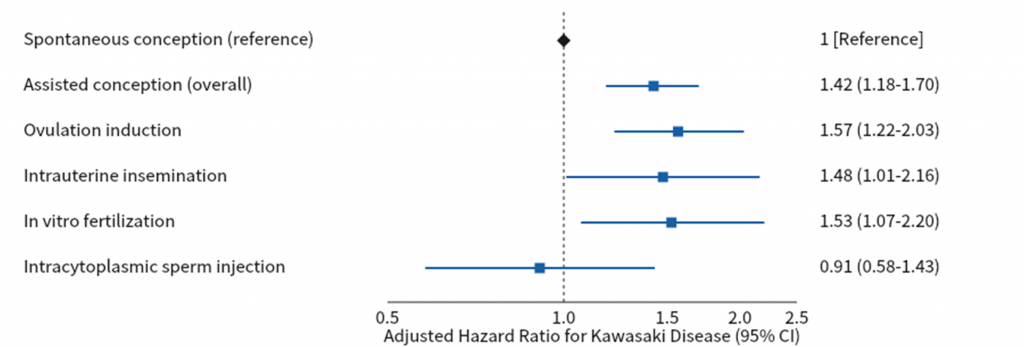
Fig1: Hazard Ratios of Kawasaki Disease, by Method of Conception
Credit: Sachiko Baba
Osaka, Japan – A large-scale study in Japan, led by researchers from the University of Osaka and the Osaka Women’s and Children’s Hospital, has found that certain fertility treatments are associated with an increased risk of Kawasaki disease before age five, although the association differed by treatment type. The findings were published in JAMA Network Open.
Kawasaki disease is a systemic inflammatory disease that primarily affects young children and is a leading cause of acquired heart disease in children. Its exact cause remains unclear.
The research team analyzed data from 101,864 children participating in the Japan Environment and Children’s Study (JECS), a nationwide prospective birth cohort. They examined Kawasaki disease occurring before age 5 among children conceived spontaneously or following ovulation induction, intrauterine insemination (IUI), in vitro fertilization (IVF), or intracytoplasmic sperm injection (ICSI).
During the 5-year follow-up, 1,226 children developed Kawasaki disease. Compared with spontaneous conception, the risk was higher following ovulation induction (adjusted hazard ratio [HR], 1.57), IUI (HR, 1.48), and IVF (HR, 1.53). ICSI showed no clear difference in risk (HR, 0.91).
These patterns remained broadly consistent after accounting for maternal conditions including endometriosis, polycystic ovary syndrome, allergic conditions, and autoimmune disease.
“Kawasaki disease remains an important cause of acquired heart disease in children, yet its causes are still not fully understood,” Ryo Kawasaki said. “Further investigation of the association between fertility treatments and Kawasaki disease may help clarify the mechanisms underlying the disease.”
The results highlight a nuanced relationship between fertility treatments and child health, showing that the association with Kawasaki disease differs by treatment type. The authors emphasize that the findings show associations rather than causation and require confirmation in other populations.
###
The article, “Fertility Treatments and the Risk of Kawasaki Disease Among Offspring,” was published in JAMA Network Open at DOI:https://doi:10.1001/jamanetworkopen.2026.28586
Summary:
A nationwide Japanese birth cohort study of 101,864 children found that ovulation induction, intrauterine insemination and in vitro fertilization were associated with a higher risk of Kawasaki disease before age five compared with spontaneous conception. Intracytoplasmic sperm injection showed no clear difference in risk. The findings remained broadly consistent after adjustment for maternal comorbidities and highlight the need for further research into underlying mechanisms.
X:
Some fertility treatments were associated with higher Kawasaki disease risk before age 5.
@UOsaka_en
Keywords:Pediatrics, Inflammatory disorders, Cohort studies, Epidemiology
Title:Fertility Treatments and the Risk of Kawasaki Disease Among Offspring
Journal:JAMA Network Open
Authors:Sachiko Baba, Kanami Tanigawa, Junji Miyazaki, Kazuko Wada, Michiko Kodama, Ryo Kawasaki, Hiroyasu Iso
DOI:10.1001/jamanetworkopen.2026.28586
Funded by:Ministry of the Environment
Article publication date:12-AUG-2026
Related links:
Ryo Kawasaki
https://rd.iai.osaka-u.ac.jp/en/4c89cb09922bae2c.html
Method of Research:Observational study
Subject of Research:People