The diversity of the physicochemical properties of the metabolome
 MetaboAdmin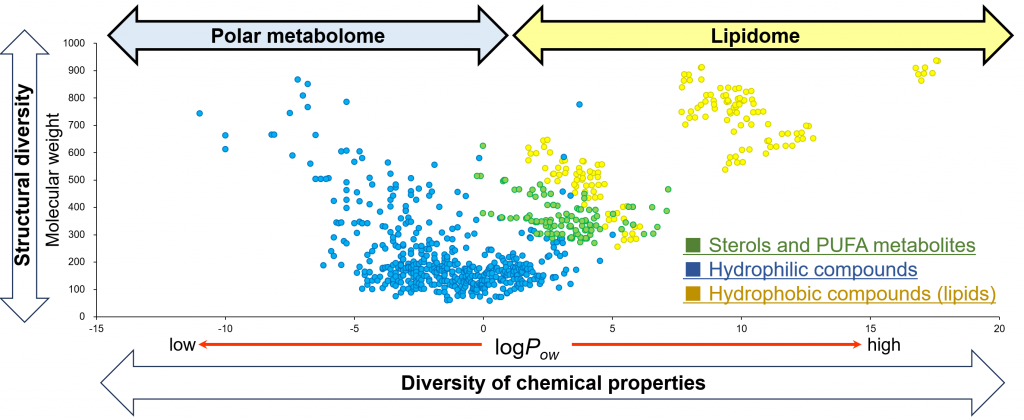
The metabolome is characterized by a wide range of physicochemical properties. These properties include, for example, molecular weight (up to ~2,000), polarity (from low to high), charge characteristics (cationic, zwitterionic, anionic, and uncharged), and molecular stereochemistry (chirality). The figure shows the molecular weights and n-octanol/water partition coefficients (logPow) for a total of 715 standard compounds held by our laboratory. I believe the molecular weights reveal structural diversity, while the logPow values offer a glimpse into the diversity of chemical properties. When we further consider differences in charge characteristics and three-dimensional structures, we can truly appreciate the complexity of the metabolome’s physicochemical properties. This complexity makes it difficult to measure all these metabolites using a single analytical method.
In metabolome analysis, to reduce the difficulty of analysis even slightly, it is common practice to separate the metabolome into “water-soluble” hydrophilic metabolites and “oil-soluble” lipophilic metabolites (lipids) through pretreatment, grouping those with relatively similar physical properties together and analyzing them separately. In particular, the totality of lipids is called the lipidome, and the technology and field of study analyzing the lipidome is called lipidomics. Furthermore, in contrast to the hydrophobic lipidome, we refer to the totality of the former hydrophilic metabolites as the hydrophilic metabolome. The hydrophilic metabolome is sometimes simply called the metabolome. Metabolome analysis can be defined as the comprehensive analysis of these hydrophilic metabolome and lipidome components.
However, even if we divide the metabolome into two categories—the hydrophilic metabolome and the lipidome—it is currently difficult to measure each of them using a single analytical method. To identify and quantify individual metabolites from complex mixtures of biological components, it is essential to select the appropriate analytical method based on the sample and the metabolites of interest. The Baba Laboratory has developed a variety of analytical methods to accommodate all types of samples and target compounds. We would like to introduce some of the analytical options we have developed so far on our website. We hope that our lab members will learn various analytical techniques and know-how in the lab and expand the range of analytical options available to them. Let’s work together to become analytical professionals who can select the most appropriate analytical method for each sample and target compound while increasing our repertoire of analytical options. (Continued in “Development of Analytical Techniques”)
Analytical Instruments Used in the Bamba Lab
・Liquid Chromatograph
・Gas Chromatograph
・Supercritical Fluid Chromatograph
・Mass Spectrometer
・Absorbance Detector / Photodiode Array Detector
・etc.