Transformative Analysis for Human Specimen
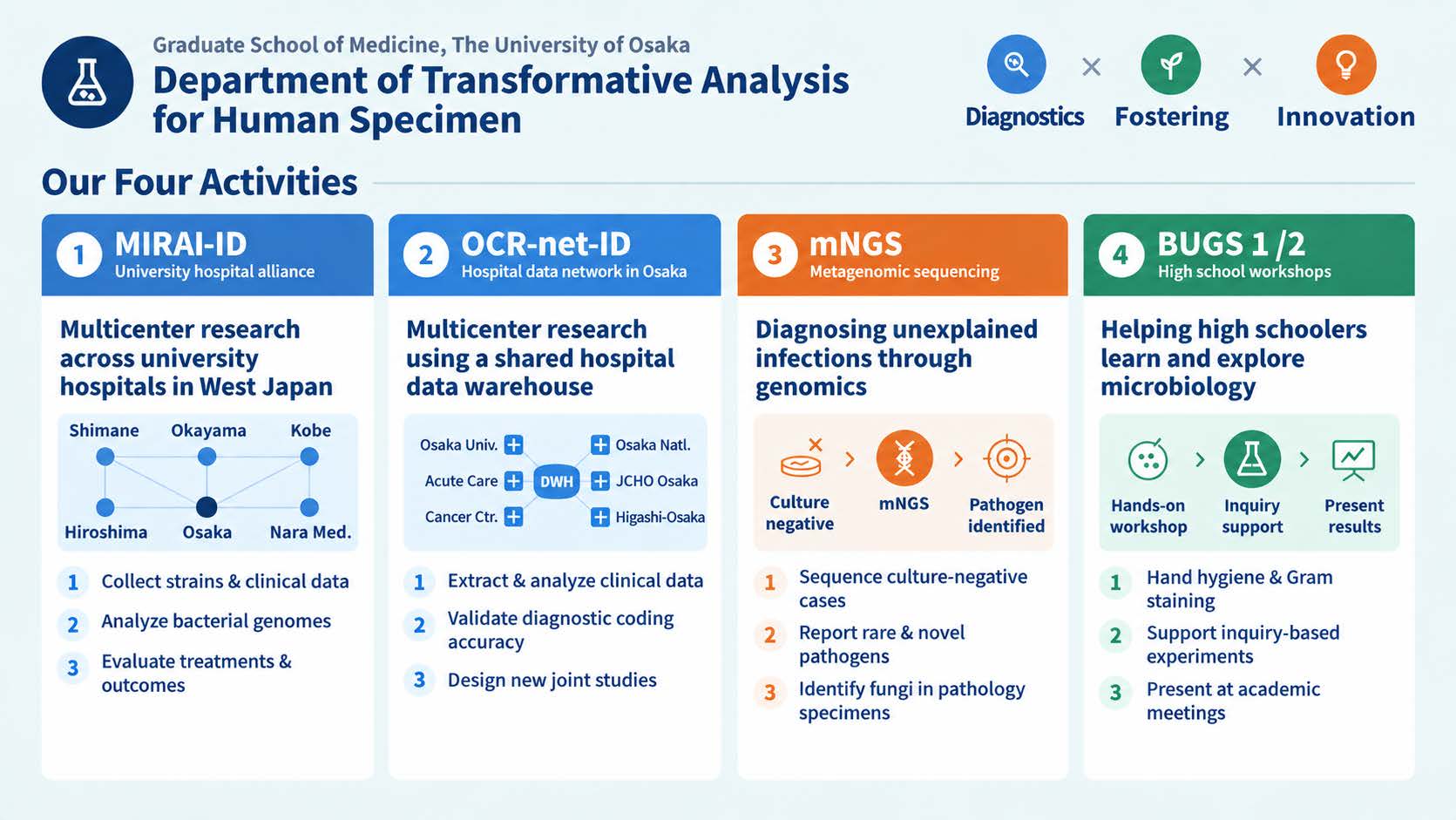
- 1.Establishment of MIRAI-ID (Multicenter Innovative Research Alliance in Infectious Diseases)
- 2.Establishment of OCR-net-ID (Osaka Clinical Research Network of Infectious Diseases)
- 3.Metagenomic Next-Generation Sequencing Diagnostic Platform
- 4.Development of an Educational Program to Foster High School Students’ Interest in Infectious Diseases and Microbiology
Developing human resources capable of establishing new specimen analysis systems and fostering the next generation of researchers
1.Establishment of MIRAI-ID (Multicenter Innovative Research Alliance in Infectious Diseases)
We have established a multicenter collaborative research alliance among university hospitals across western Japan, including Hiroshima University, Nara Medical University, Kobe University, Shimane University, Osaka University, and Okayama University. Three projects are currently underway: genetic analysis of GBS isolates from blood cultures in adult patients; a multicenter retrospective study of Citrobacter koseri bacteremia; and genetic analysis of strains from cases of Clostridium butyricum bacteremia.
2.Establishment of OCR-net-ID (Osaka Clinical Research Network of Infectious Diseases)
Using the common data warehouse (DWH) shared by Osaka University Hospital, Osaka General Medical Center, Osaka International Cancer Institute, Osaka Medical Center, and JCHO Osaka Hospital, we are building an infrastructure for multicenter infectious disease research. Two studies are currently being planned: evaluation of the diagnostic performance of diagnosis names for conditions covered by the Infectious Diseases Control Law; and disseminated cryptococcosis in non-HIV-infected patients.
3.We are building an mNGS diagnostic platform centered at Osaka University Hospital to identify causative microorganisms in culture-negative and diagnostically challenging cases. Through collaborative research, we aim to advance the epidemiology and genomic analysis of rare and emerging infectious diseases while fostering next-generation talent.
4.The BUGS workshop is a program for high school students. Through this program, we are fostering the next generation interested in medicine and infectious diseases.