Orthopedic Biomaterial Science
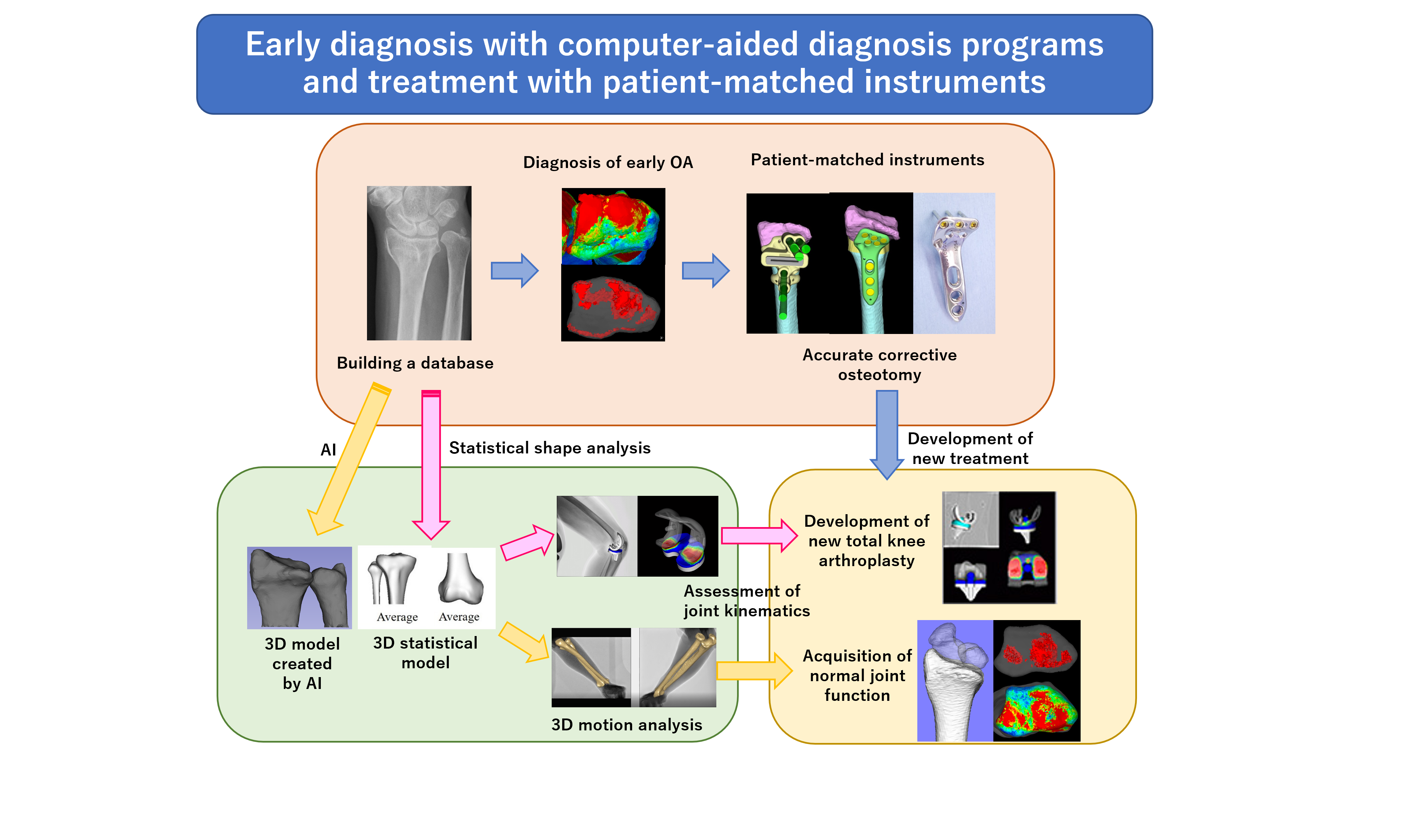
- 3D bone morphology and joint motion analysis
- 3D surgical planning and patient-matched guides and implants
- Joint motion analysis for prosthesis design and function
- Stress and bone density analysis for joint preservation
- AI for cartilage imaging, 3D reconstruction and diagnosis
Engineering Better Joint Function with 3D Analysis and AI
Orthopaedic Biomaterial Science combines medicine and engineering to improve joint care, quality of life and healthy life expectancy.
We use X-ray and CT images to study bone shape and joint motion in three dimensions. These analyses help explain joint disorders and guide prosthesis development. Stress and bone density analyses explore how altered bone alignment affects adjacent joints, supporting research on osteoarthritis prediction and joint preservation.
CT-based surgical simulation guides the development of patient-matched cutting guides and fixation plates. These tools transfer virtual plans to surgery, supporting accurate deformity correction and restoration of joint form and motion.
We also develop AI to visualize cartilage not directly depicted on plain X-rays and generate 3D images from 2D images. These research-stage tools aim to support diagnosis and planning. Through collaboration with engineers, clinicians and industry, we seek to translate these advances into patient care.