The following presentations were given at the 12th Meeting of the Japanese Society for Cancer and Metabolism (held in Yamanaka Onsen, Ishikawa Prefecture, on June 25–26, 2026) and the 28th Annual Meeting of the Japanese Society of Molecular Target Therapy of Cancer (held in Hiroshima City, Hiroshima Prefecture, from June 30 to July 2, 2026):
Associate Professor Sho Tabata: “Systemic Metabolism Altered by Tumors: Inter-organ Metabolic Crosstalk in a Small-Cell Lung Cancer Model” (12th Meeting of the Japanese Society for Cancer and Metabolism); “Environment-Dependent Metabolic Vulnerability of HPRT1-Deficient Cancer Cells in 3D Culture Models” (28th Annual Meeting of the Japanese Society of Molecular Target Therapy of Cancer).
A collaborative research paper with the Ogawa Lab, Graduate School of Medical Sciences, Kyushu University, has been accepted by The Journal of Clinical Endocrinology & Metabolism.
Inflammatory Markers Link Steroid Profiles to Bone Status in Patients with Autonomous Cortisol Secretion. Kitamura Y, Yokomoto-Umakoshi M, Nakano Y, Nakatani K, Umakoshi H, Nakao H, Kaneko H, Iwahashi N, Fujita M, Ogasawara T, Fukumoto T, Sakamoto R, Bamba T, Ogawa Y.
The following presentation was given at ASMS (American Society for Mass Spectrometry) 2026, held in San Diego, USA from May 31st to June 4th, 2026:
Keisuke Nakata, Assistant Professor: Analytical strategies for the preservation and quantification of reduced folates: A systematic evaluation using high-resolution tandem mass spectrometry.
The following presentation was given at SFC/SFE Japan 2026, held in Kawasaki City on May 18-19, 2026.
Oral Prof.Takeshi Bamba: Development of SFC/MS-Based Next-Generation Metabolome Analysis Technologies
Poster Kazuki Matsumaru (Research Student): Development of a solubility measurement system in supercritical carbon dioxide based on an online supercritical fluid extraction–separation system.
[Background and History of the Research] Metabolites include components ingested through diet and those biosynthesized within the body from these components. In diseases, it is frequently observed that specific metabolites are overproduced or depleted. Therefore, detailed and continuous monitoring of metabolic balance is expected to contribute to early disease diagnosis and the development of new treatment strategies. However, it is extremely difficult to simultaneously measure the entire metabolome—comprising thousands of metabolites—in a single analysis. Consequently, cumbersome methods involving the combination of multiple analytical techniques across various platforms have been employed until now. Cohort studies handling large numbers of samples face the challenge of having to select specific analytical methods, which limits the metabolite information that can be utilized.
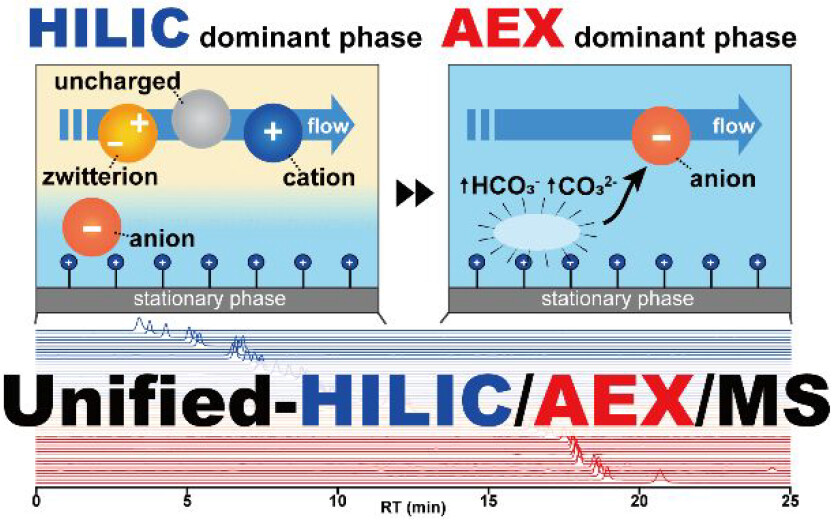
[Research Content and Results] We focused on the fact that metabolites can be classified into two groups based on their charge: anionic and non-anionic (cationic, zwitterionic, and uncharged). Therefore, we investigated a separation method using a proprietary separation column with primary to tertiary amines and quaternary ammonium cations as the stationary phase. After detailed optimization of conditions, we developed a method in which hydrophilic interaction chromatography (HILIC) to adsorb anionic metabolites onto the positively charged stationary phase, while simultaneously separating and analyzing other cationic, zwitterionic, and uncharged metabolites based on differences in polarity. This is followed seamlessly by anion exchange chromatography (AEX) in the second half of the analysis to separate and analyze the anionic metabolites adsorbed onto the stationary phase based on differences in ionic strength. We named this newly developed separation and detection method “unified-HILIC/AEX/MS” and compared its analytical performance in metabolome analysis with conventional methods. The results confirmed that this method demonstrates superior performance to the measurement methods commonly used worldwide to date in terms of accuracy and the amount of metabolite information obtained.
【Future Prospects】 Going forward, this method is expected to revolutionize the metabolic measurements widely used around the world and serve as a new tool for elucidating the mechanisms of various diseases. In our laboratory, we plan to apply this method to metabolic studies of various model organisms, including human samples, with the aim of elucidating the molecular basis of biological phenomena involving metabolism. Furthermore, given this method’s exceptional ability to measure small-molecule compounds, it is expected to be utilized in various fields, such as functional food components, pharmacokinetics, and pesticide residues.
[Glossary] (※1) Liquid Chromatography A technique for separating compounds. It uses liquids such as water or organic solvents as the mobile phase. The sample passes through a column along with the mobile phase and is separated as it interacts with the stationary phase within the column. Since the elution time of each compound varies depending on the strength of this interaction, this elution time can be used to identify specific compounds.
(※2) Mass Spectrometry An analytical method in which molecules are ionized, and the mass-to-charge ratio (mass number ÷ charge number) of the traveling ions is separated and detected using electrical and magnetic forces.
(※3) HILIC In liquid chromatography, the name of the separation mode varies depending on the type of interaction. The method that separates compounds using hydrophilic interactions is called hydrophilic interaction chromatography (HILIC).
(※4) AEX In liquid chromatography, the mode in which separation is based on ionic interactions is called ion chromatography. Specifically, when the analytes are anions, this method is called anion exchange chromatography (AEX).
[Publication Information] Journal: Analytical Chemistry Title: Unified-hydrophilic-interaction/anion-exchange liquid chromatography mass spectrometry (unified-HILIC/AEX/MS): A single-run method for comprehensive and simultaneous analysis of the polar metabolome Authors: Kohta Nakatani, Yoshihiro Izumi, Masatomo Takahashi, Takeshi Bamba. (*Co-corresponding author) DOI: 10.1021/acs.analchem.2c03986
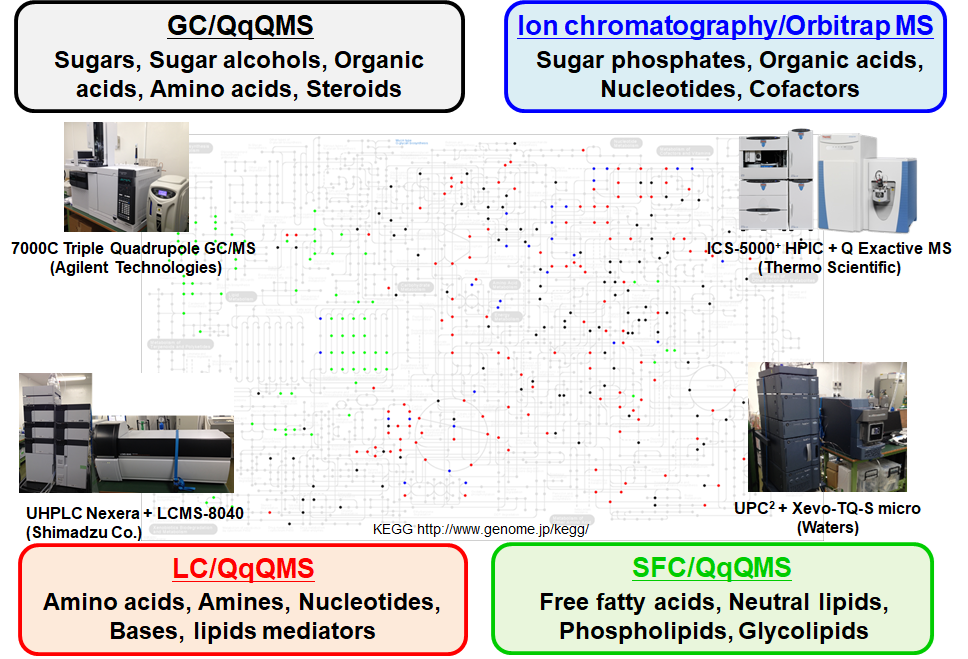
To comprehensively analyze the polar metabolome, the Baba Laboratory is developing analytical methods such as reversed-phase liquid chromatography mass spectrometry (LC/MS), hydrophilic interaction liquid chromatography mass spectrometry (HILIC/MS), ion chromatography mass spectrometry (IC/MS), and gas chromatography mass spectrometry (GC/MS). By combining these techniques, we perform comprehensive metabolome analyses.
Lipids, along with carbohydrates and proteins, are known as the three major macronutrients. They are essential for sustaining life and physical activity, serving as the primary components of biological membranes, a source of energy, and regulators of neural transmission and immune defense. Since lipids consist of various types of fatty acids linked to alcohols (glycerol, sphingosine, sterols) via ester or amide bonds, it is estimated that tens of thousands of different lipid molecules exist in theory. It has been suggested that differences in the composition of these lipid molecules are involved in various diseases, and the identification and quantification of individual lipid molecules are essential for understanding their biological functions and metabolic regulation. In fact, lipidomics—the comprehensive and quantitative analysis of individual lipid molecules—is attracting attention in various research fields, including medical research. Because there are a vast number of lipid molecules in the body due to the diversity of polar heads and fatty acid side chains, advanced analytical techniques are required to measure these lipid molecules comprehensively and accurately. An electrospray ionization mass spectrometer (ESI-MS) is a device capable of simultaneously measuring ionized compounds and can be coupled with various types of chromatographs that separate compounds based on differences in elution time. However, a major issue with ESI-MS is that ionization is suppressed by contaminants that elute simultaneously with the target compound. Because the impurities eluting simultaneously with the target compound vary depending on the separation conditions of the chromatograph, completely different quantitative values were calculated at each research facility, making it impossible to accumulate data¹). The Baba Laboratory has developed a novel analytical method that enables comprehensive quantification of lipid molecules in living organisms by optimizing the separation and analysis conditions of the chromatograph and mass spectrometer² (Figure 1).
Figure 1. Strategy for the quantitative analysis of biological lipid molecules
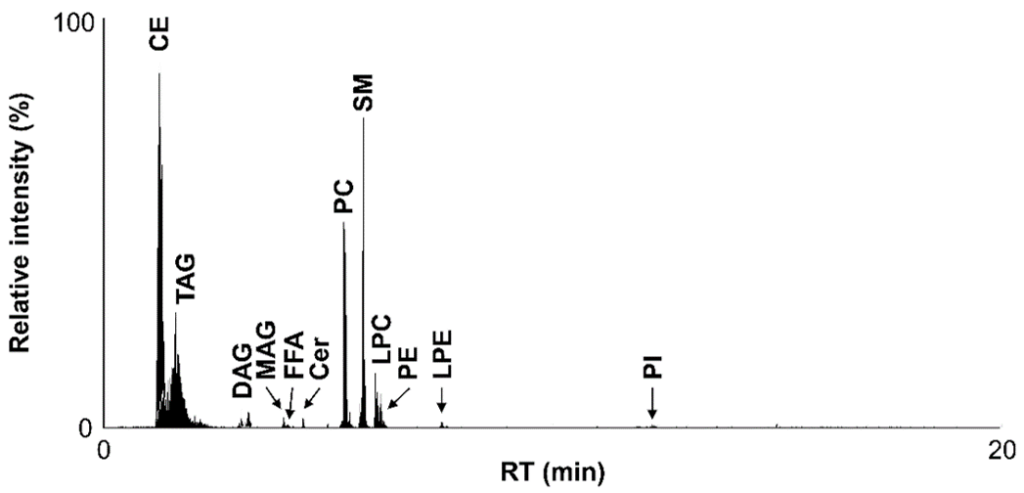
To perform quantification using ESI-MS, internal standards corresponding to each lipid molecule must be added to correct for suppression of ionization; however, it is practically impossible to obtain internal standards for all lipid molecules. First, using lipid synthesis standards, we confirmed that lipid molecules within the same lipid class (lipid molecules sharing a common backbone, such as glycerol, or a common polar head group, such as phosphocholine) ionize with similar efficiency. We therefore optimized conditions using supercritical fluid chromatography (SFC) to separate each lipid class based on differences in elution time, and performed measurements by adding internal standards not found in the body for each lipid class. The results showed that quantitative values could be calculated with an accuracy of 64.9% to 103.5% for all lipid classes. Furthermore, the daily variation was kept within 10% for almost all lipid classes, allowing us to overcome the issues related to quantification.
Figure 1. Strategy for the quantitative analysis of biological lipid molecules
To perform quantification using ESI-MS, internal standards corresponding to each lipid molecule must be added to correct for suppression of ionization; however, it is practically impossible to obtain internal standards for all lipid molecules. First, using lipid synthesis standards, we confirmed that lipid molecules within the same lipid class (lipid molecules sharing a common backbone, such as glycerol, or a common polar head group, such as phosphocholine) ionize with similar efficiency. We therefore optimized conditions using supercritical fluid chromatography (SFC) to separate each lipid class based on differences in elution time, and performed measurements by adding internal standards not found in the body for each lipid class. The results showed that quantitative values could be calculated with an accuracy of 64.9% to 103.5% for all lipid classes. Furthermore, the daily variation was kept within 10% for almost all lipid classes, allowing us to overcome the issues related to quantification. When chromatography elutes lipids of the same class simultaneously, the separation of lipid molecules within that class must rely on mass spectrometry. Therefore, we applied separation using the multiple reaction monitoring (MRM) mode of a triple quadrupole mass spectrometer (QqQ-MS). In MRM mode, ionized lipid molecules are selected, cleaved by an inert gas, and then the resulting fragments are further selected for detection. By detecting fragments derived from the constituent fatty acids cleaved from individual lipid molecules, we were able to identify individual lipid molecules, including their structural isomers (Figure 2).
Figure 2. Quantitative analysis of lipid molecules in rabbit plasma
In MRM mode, the target compounds must be determined in advance. To apply this analytical method to all biological samples, we created an in-house lipid MRM library containing lipid molecules found in living organisms. First, we screen for lipid molecules in biological samples using the in-house lipid MRM library. By reconstructing the MRM method based on the detected lipid molecules, we have successfully achieved quantitative lipid analysis for all biological samples. This method is being utilized in various collaborative research projects and is expected to play a role in elucidating new biological functions in the future.
References
J. A. Bowden, A. Heckert, C. Z. Ulmer, C. M. Jones, J. P. Koelmel, L. Abdullah, L. Ahonen, Y. Alnouti, A. Armando, J. M. Asara, T. Bamba, J. R. Barr, J. Bergquist, C. H. Borchers, J. Brandsma, S. B. Breitkopf, T. Cajka, A. Cazenave-Gassiot, A. Checa, M. A. Cine, R. A. Colas, S. Cremers, E. A. Dennis, J. E. Evans, A. Fauland, O. Fiehn, M. S. Gardner, T. J. Garrett, K. H. Gotlinger, J. Han, Y. Huang, A. H. Neo, T. Hyotylainen, Y. Izumi, H. Jiang, H. Jiang, J. Jiang, M. Kachman, R. Kiyonami, K. Klavins, C. Klose, H. C. Kofeler, J. Kolmert, T. Koal, G. Koster, Z. Kuklenyik, I. J. Kurland, M. Leadley, K. Lin, K. R. Maddipati, D. McDougall, P. J. Meikle, N. A. Mellett, C. Monnin, M. A. Moseley, R. Nandakumar, M. Oresic, R. E. Patterson, D. Peake, J. S. Pierce, M. Post, A. D. Postle, R. Pugh, Y. Qui, O. Quehenberger, P. Ramrup, J. Rees, B. Rembiesa, D. Reynaud, M. R. Roth, S. Sales, K. Schuhmann, M. L. Schwartzman, C. N. Serhan, A. Shevchenko, S. E. Somerville, L. St. John-Williams, M. A. Surma, H. Takeda, R. Thakare, J. W. Thompson, F. Torta, A. Triebl, M. Trotzmuller, S. J. K. Ubhayasekera, D. Vuckovic, J. M. Weir, R. Welti, M. R. Wenk, C. E. Wheelock, L. Yao, M. Yuan, X. H. Zhao, S. Zhou: Harmonizing Lipidomics: NIST Interlaboratory Comparison Exercise for Lipidomics using Standard Reference Material 1950 Metabolites in Frozen Human Plasma. J. Lipid Res. 58. 2275‒2288 (2017).
H. Takeda, Y. Izumi, M. Takahashi, T. Paxton, S. Tamura, T. Koike, Y. Yu, N. Kato, K. Nagase, M. Shiomi, T. Bamba: Widely-targeted quantitative lipidomics method by supercritical fluid chromatography triple quadrupole mass spectrometry, J. Lipid Res. 59. 1283‒1293 (2018).
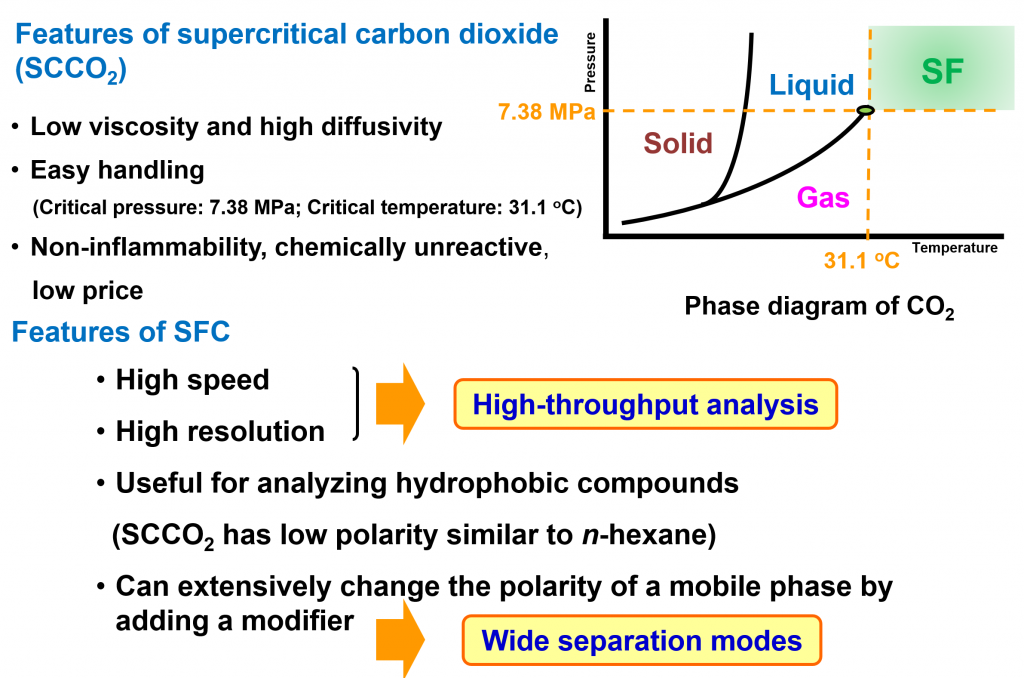
A supercritical fluid (SCF) is a fluid in which both temperature and pressure exceed the critical point of the gas-liquid phase transition; it can be considered an ideal solvent that combines the solubility of a liquid with the diffusivity of a gas. Because the properties of the solvent can be freely adjusted by controlling temperature and pressure, it is regarded as a highly functional medium capable of delivering solvent performance tailored to specific applications. Furthermore, technologies utilizing supercritical fluids are advantageous in terms of environmental impact and cost, as they can reduce the amount of organic solvents used. Supercritical fluids have been used in extraction, separation and purification, and reactions; in addition, applications that leverage the characteristics of supercritical fluids are being explored in a wide range of fields, including cleaning, dyeing, pulverization, and foaming.
Among supercritical fluids, supercritical carbon dioxide (SC-CO₂) is the most commonly used due to its properties: (1) relatively low critical temperature (31.1 °C) and critical pressure (7.38 MPa), (2) ability to dissolve many organic compounds, (3) chemical inertness, (4) it is non-toxic and inexpensive. The Baba Laboratory has been exploring the use of SC‒CO₂ in the “extraction” and “separation” processes of metabolome analysis¹). Extraction operations using supercritical fluids as the extraction medium are called supercritical fluid extraction (SFE), and chromatography using supercritical fluids as the mobile phase is called supercritical fluid chromatography (SFC). Furthermore, supercritical fluid extraction–supercritical fluid chromatography (SFE–SFC), which connects SFE and SFC online, is a technique that enables extraction and analysis to be performed in a single step.
Since the polarity of SC-CO₂ is considered to be comparable to that of hexane, it is regarded as useful for the separation and analysis of hydrophobic compounds. Initially, the mainstream approach involved using 100% carbon dioxide as the mobile phase and applying gradients by varying temperature and pressure; however, in recent years, it has become more common to use subcritical fluids created by adding organic solvents such as methanol to SC-CO₂ as modifiers. This is because adding a modifier increases the solubility of polar compounds in the mobile phase, enabling the simultaneous separation and analysis of compounds with a wide range of physical properties.
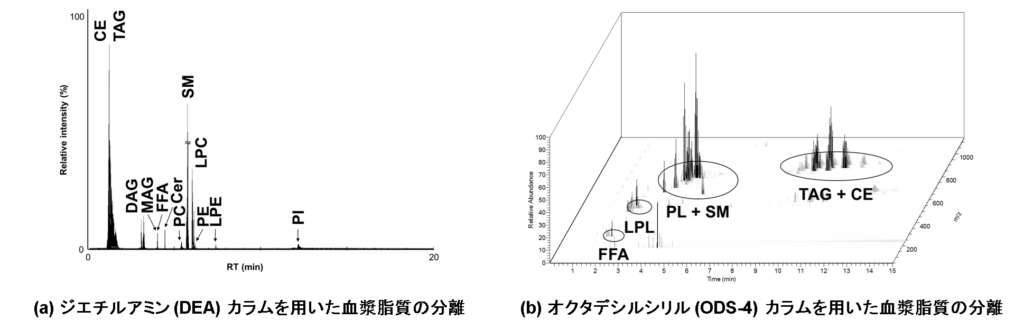
As a practical application of supercritical fluid technology, we have been developing a technique for the simultaneous analysis of lipid molecules (lipome analysis) using SFC/MS. By connecting a quadrupole orbitrap mass spectrometer—capable of high-resolution mass measurements and MS² analysis—to the SFC system, we have successfully identified and quantified more than 500 lipid species from mouse plasma extracts²). Furthermore, SFE is a method in which the supercritical fluid (SCF) is added to a sample containing the target component, and extraction is performed by utilizing differences in solubility. Compared to conventional organic solvent extraction methods, SFE offers advantages such as high extraction efficiency and the ability to perform extraction under mild conditions in the dark and in an oxygen-free environment, resulting in a low environmental impact. Therefore, we have also investigated an online SFE-SFC/MS metabolic profiling method that maximizes the characteristics of SFE and the advantages of SFC/MS. Online SFE-SFC/MS is a technology applicable to filter paper blood samples for newborn mass screening, diagnosis of hereditary diseases, and biomarker screening. When phospholipid profiling using online SFE-SFC/MS was performed on filter paper blood prepared from a small amount of mouse plasma (3 μL), we successfully quantified 134 types of phospholipids³).
Supercritical fluid technology is a novel technique that expands the range of solvents available for the “extraction” and “separation” of compounds. While its usefulness is gradually gaining recognition, we intend to continue developing new analytical methods and applications that leverage the properties of supercritical fluids. In our article on analytical technology development, we introduce a new analytical method for quantitative lipidomics, so we encourage you to read it.
References
Bamba T, Lee JW, Matsubara A et al : Metabolic profiling of lipids by supercritical fluid chromatography/mass spectrometry. J Chromatogr A 1250, 212–219 (2012).
Yamada T, Uchikata T, Sakamoto S et al : Supercritical fluid chromatography/orbitrap mass spectrometry based lipidomics platform coupled with automated lipid identification software for accurate lipid profiling. J. Chromatogr. A 1301, 237–242 (2013).
Uchikata T, Matsubara A, Fukusaki E et al : High-throughput phospholipid profiling system based on supercritical fluid extraction-supercritical fluid chromatography/mass spectrometry for dried plasma spot analysis. J. Chromatogr. A 1250, 69–75 (2012).
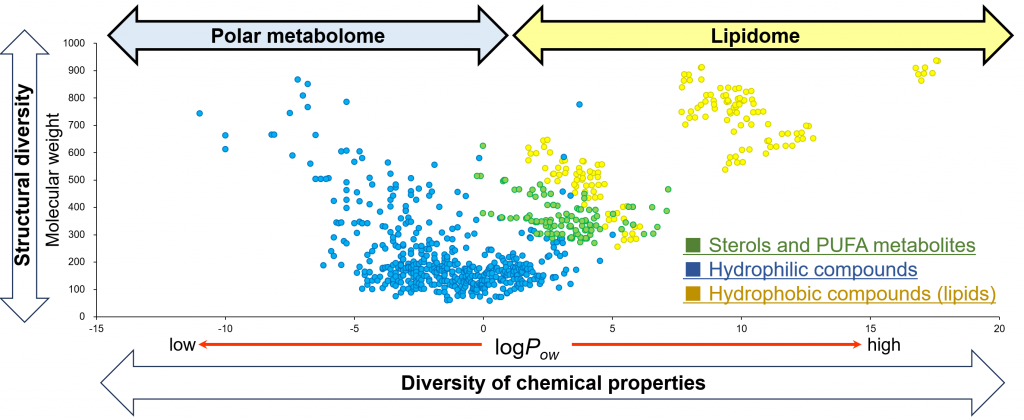
The metabolome is characterized by a wide range of physicochemical properties. These properties include, for example, molecular weight (up to ~2,000), polarity (from low to high), charge characteristics (cationic, zwitterionic, anionic, and uncharged), and molecular stereochemistry (chirality). The figure shows the molecular weights and n-octanol/water partition coefficients (logPow) for a total of 715 standard compounds held by our laboratory. I believe the molecular weights reveal structural diversity, while the logPow values offer a glimpse into the diversity of chemical properties. When we further consider differences in charge characteristics and three-dimensional structures, we can truly appreciate the complexity of the metabolome’s physicochemical properties. This complexity makes it difficult to measure all these metabolites using a single analytical method. In metabolome analysis, to reduce the difficulty of analysis even slightly, it is common practice to separate the metabolome into “water-soluble” hydrophilic metabolites and “oil-soluble” lipophilic metabolites (lipids) through pretreatment, grouping those with relatively similar physical properties together and analyzing them separately. In particular, the totality of lipids is called the lipidome, and the technology and field of study analyzing the lipidome is called lipidomics. Furthermore, in contrast to the hydrophobic lipidome, we refer to the totality of the former hydrophilic metabolites as the hydrophilic metabolome. The hydrophilic metabolome is sometimes simply called the metabolome. Metabolome analysis can be defined as the comprehensive analysis of these hydrophilic metabolome and lipidome components. However, even if we divide the metabolome into two categories—the hydrophilic metabolome and the lipidome—it is currently difficult to measure each of them using a single analytical method. To identify and quantify individual metabolites from complex mixtures of biological components, it is essential to select the appropriate analytical method based on the sample and the metabolites of interest. The Baba Laboratory has developed a variety of analytical methods to accommodate all types of samples and target compounds. We would like to introduce some of the analytical options we have developed so far on our website. We hope that our lab members will learn various analytical techniques and know-how in the lab and expand the range of analytical options available to them. Let’s work together to become analytical professionals who can select the most appropriate analytical method for each sample and target compound while increasing our repertoire of analytical options. (Continued in “Development of Analytical Techniques”)
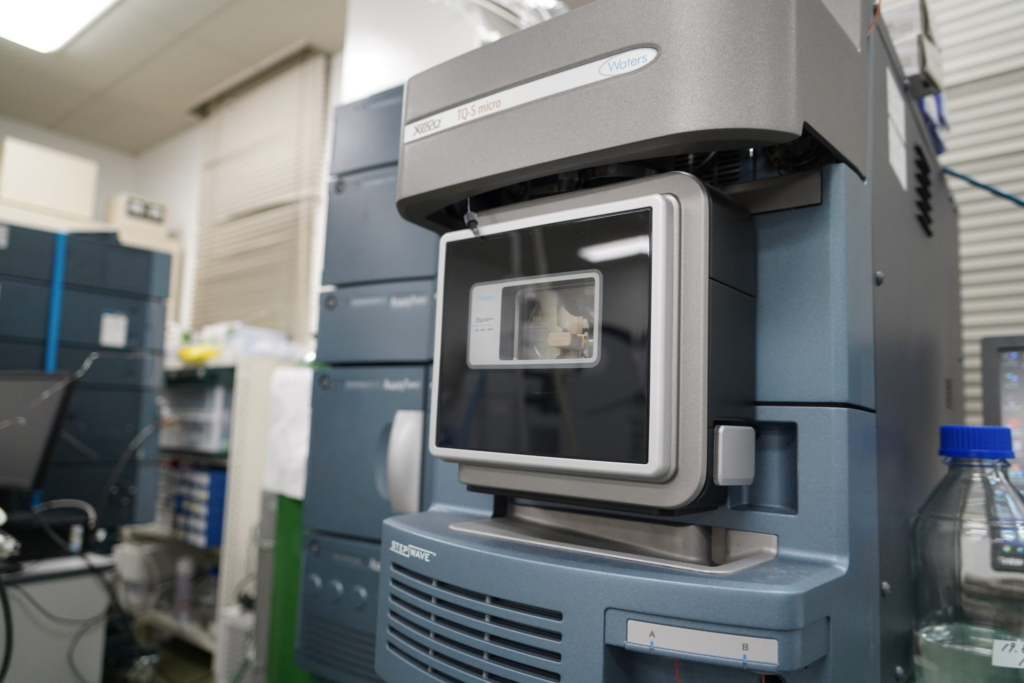
Analytical Instruments Used in the Bamba Lab ・Liquid Chromatograph ・Gas Chromatograph ・Supercritical Fluid Chromatograph ・Mass Spectrometer ・Absorbance Detector / Photodiode Array Detector ・etc.
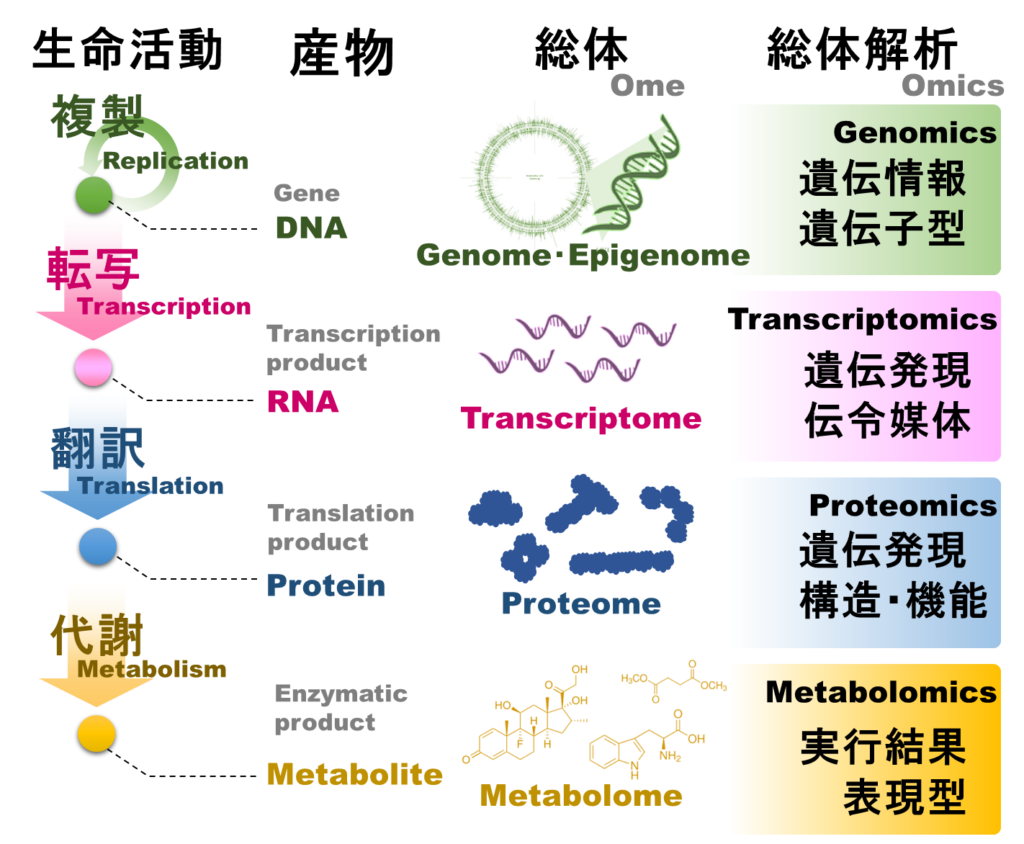
The Human Genome Project, launched in 1990, led to the complete sequencing of the human genome in 2003. While this project estimated that humans have approximately 30,000 genes, it also revealed that there are numerous biological phenomena that cannot be explained by genomic information alone. Consequently, since 2003, the term “post-genomic era” has been used to describe the transition to the next phase of research beyond genomics. Genomic information is transcribed and then translated into proteins. The resulting enzyme proteins synthesize the metabolites necessary for life. The totality of these metabolites is called the “metabolome,” and the technology and science of analyzing the metabolome is called “metabolomics.” If the genome is the blueprint of an organism, then the metabolome—which represents the totality of metabolic products—is, so to speak, the result of the execution of genomic information. The profile of the quantitative balance of multiple metabolites within a living organism can be considered a high-resolution, quantitative phenotype that reflects genomic and environmental information. Currently, metabolomics is attracting attention as one of the leading research fields in the post-genomic era. The usefulness of metabolomics is being reported daily across a wide range of fields, including disease diagnosis, analysis of disease pathogenesis mechanisms, evaluation of drug efficacy and toxicity, metabolic analysis of various organisms such as plants, microorganisms, and animals, and quality assessment of foods and herbal medicines. Metabolomics is a promising technology expected to be actively utilized in various fields such as medicine, pharmaceuticals, food, and the environment, and is the focus of attention in each of these fields.